
What post-purchase email flows should every eCommerce brand have?
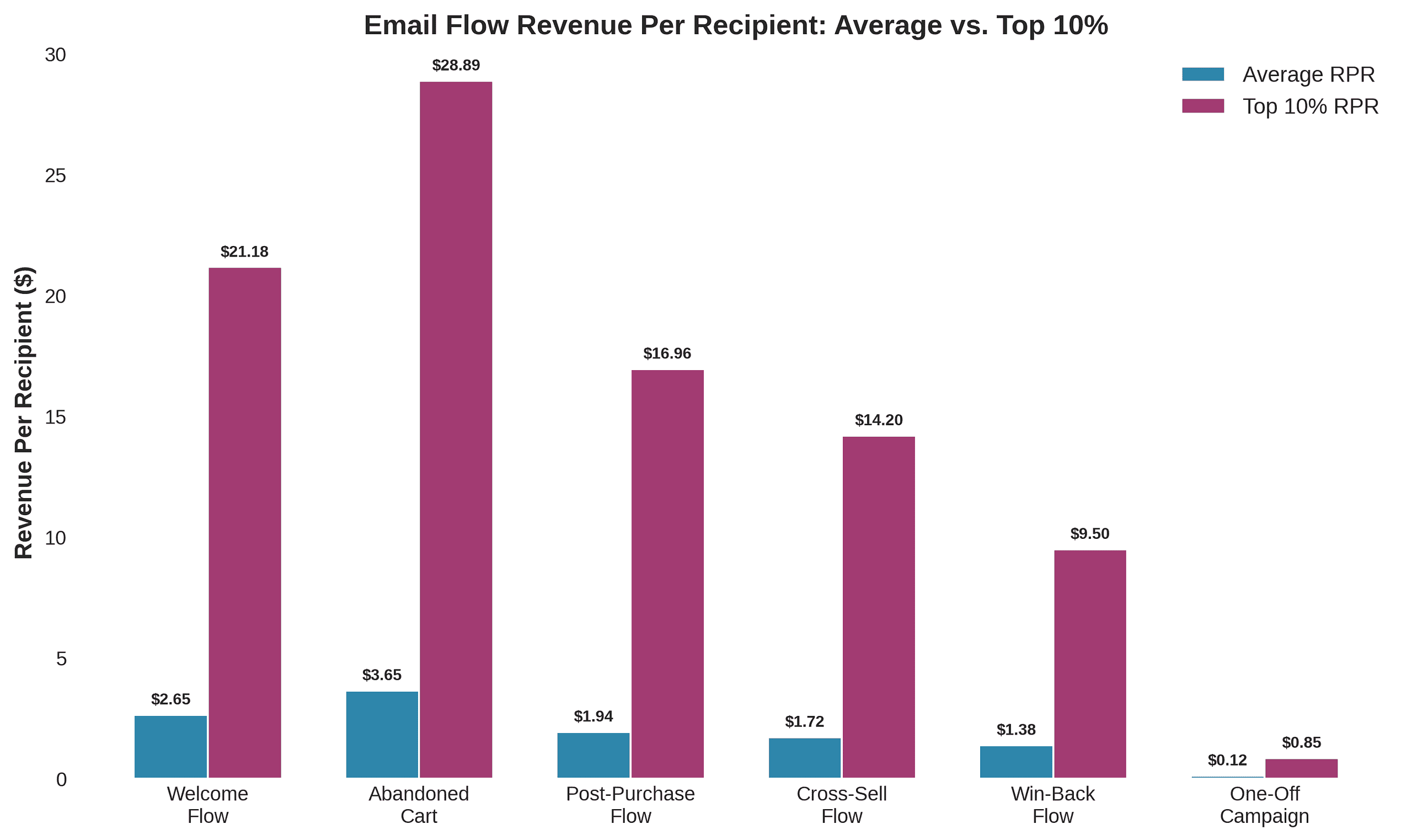
Seven core sequences: order confirmation, shipping/delivery, product education, review request, cross-sell/upsell, replenishment, and winback. These flows are the highest-ROI automations most brands underinvest in — they convert one-time buyers into repeat customers at 5–10x the cost-efficiency of paid acquisition.
When should you send a review request email after purchase?
7–14 days after delivery for most physical products — long enough to use the product, short enough to remember the experience. For consumables, push to 21–30 days. Brands hitting the right window see review submission rates of 8–12% vs. 2–3% for poorly timed requests.
How much revenue should post-purchase flows drive for a DTC brand?
Post-purchase flows should drive 15–25% of total email revenue for a healthy DTC brand — and that's just the email contribution. Layered with SMS replenishment and review requests fueling UGC, the post-purchase engine often drives 30%+ of repeat-purchase LTV.
Why Post-Purchase Emails Are Your Highest-ROI Channel
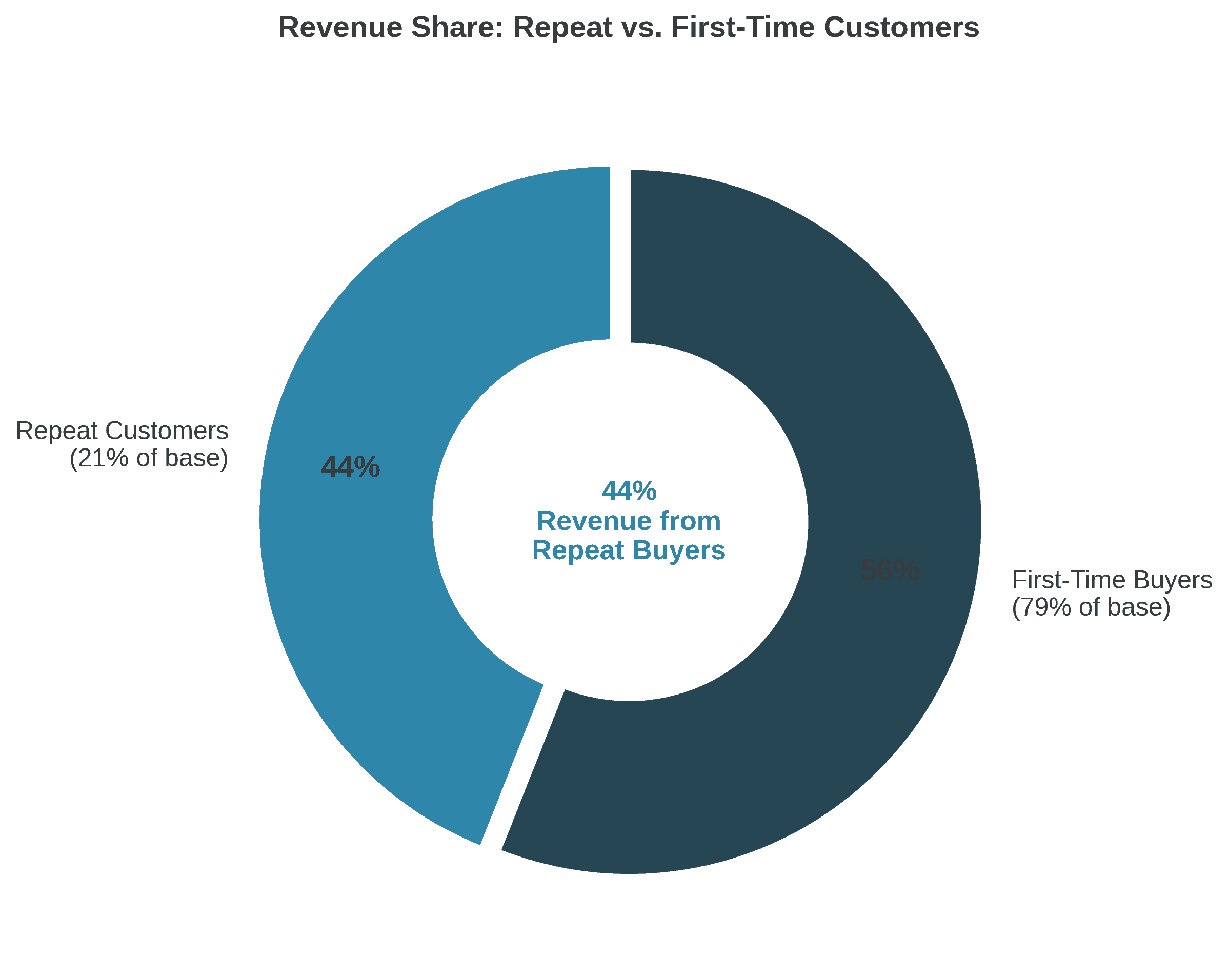
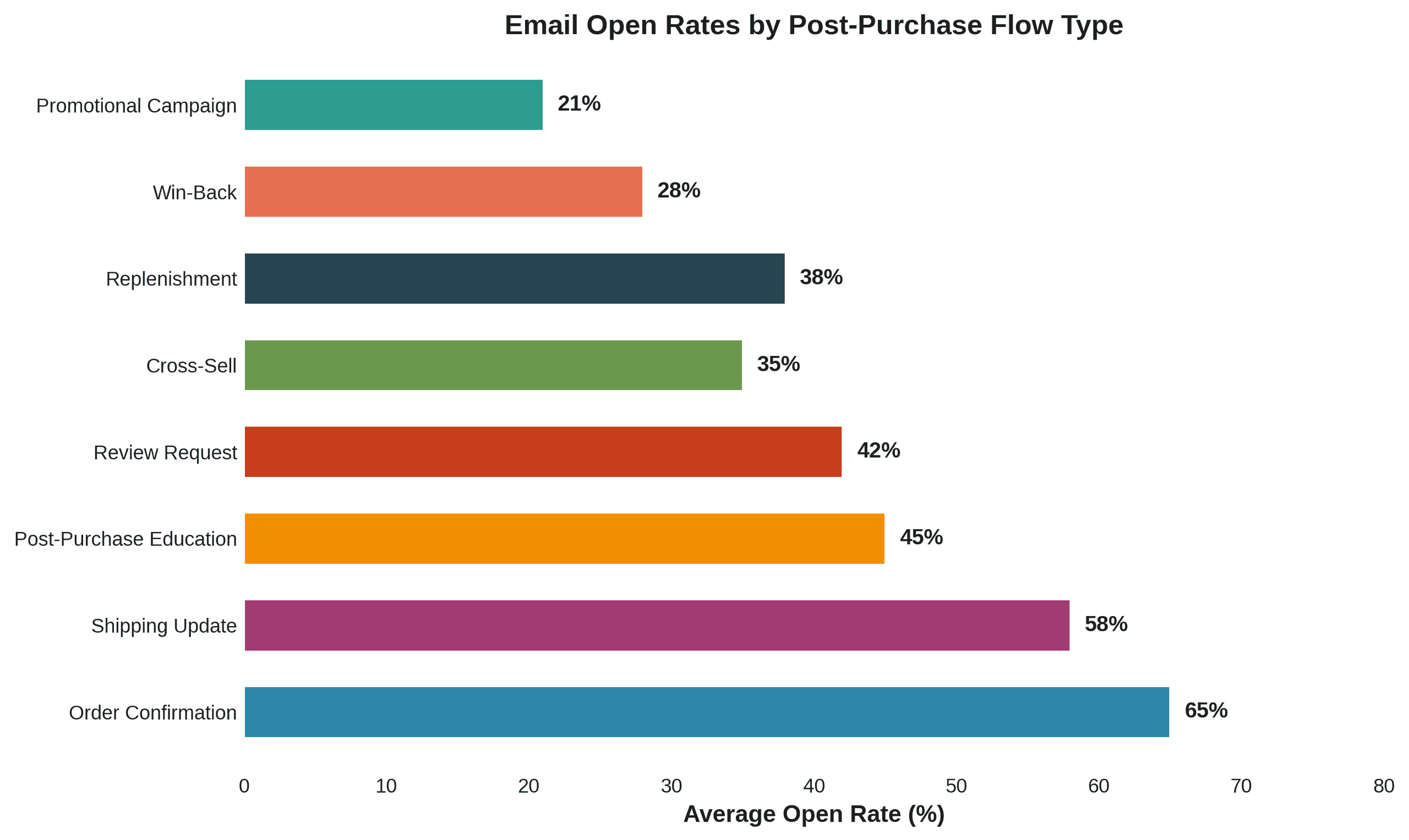
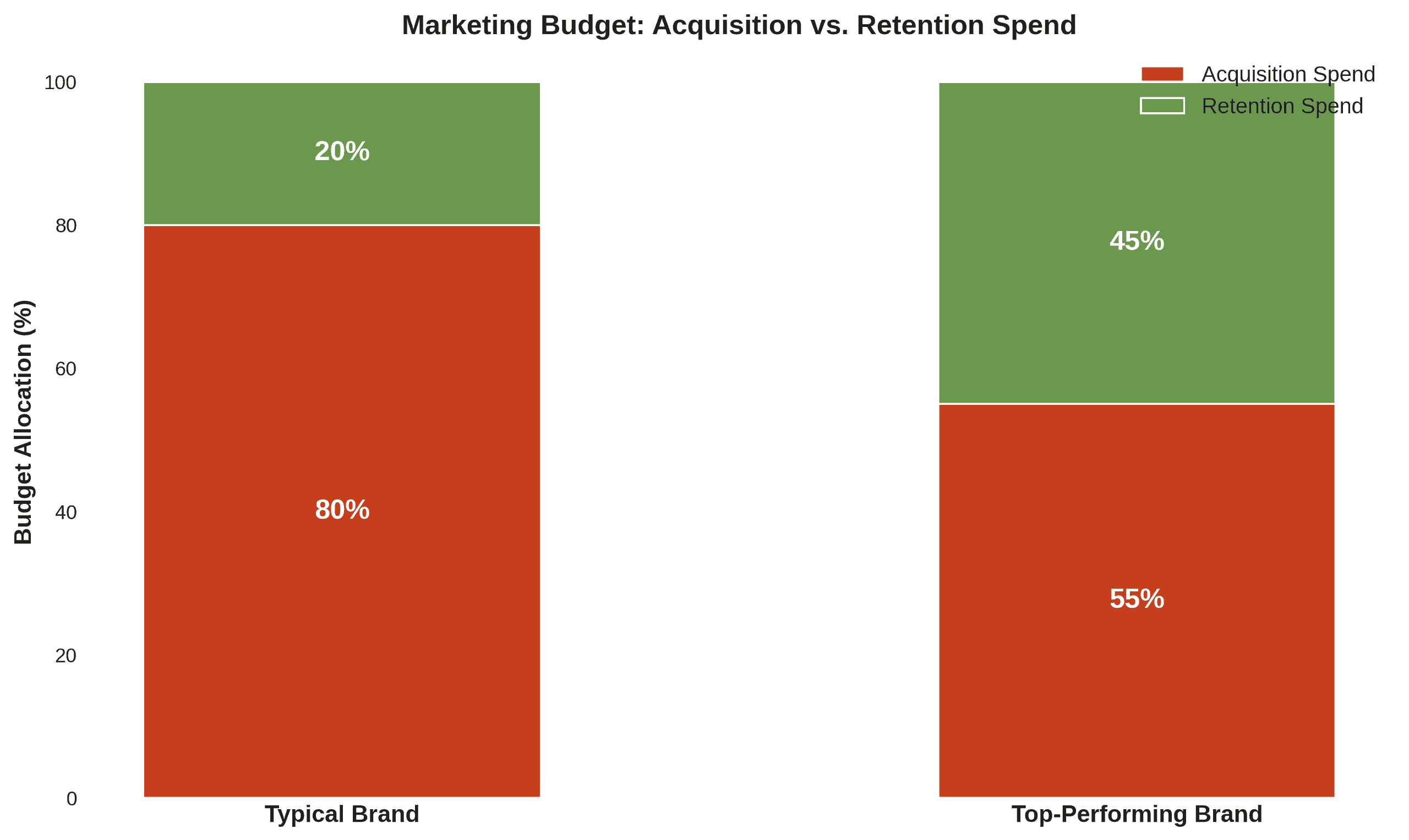
Here's the math that makes post-purchase flows a no-brainer: repeat customers generate 44% of total ecommerce revenue and 46% of orders, despite representing only 21% of the customer base. Returning customers spend 67% more on average than first-time buyers. Yet most brands pour 80% of their marketing budget into acquisition. The cost to retain an existing customer is 5-25x less than acquiring a new one, per Harvard Business Review research."Fun and easy retention tactics that work for DTC brands: loyalty and referral programs, building out content for customers, investing into community, adding gifts with purchase, and sampling from like-minded brands." - Nik Sharma, CEO at Sharma Brands (Source: X/Twitter)Post-purchase emails capitalize on the highest-intent moment in your customer relationship. Your buyer just trusted you with their money. They're engaged, they're excited, and their inbox is where they're looking for updates. Automated flows like post-purchase sequences show 40-45% open rates with 10-15% repeat purchase rates, far exceeding industry averages.
1. Order Confirmation and Thank You Sequence
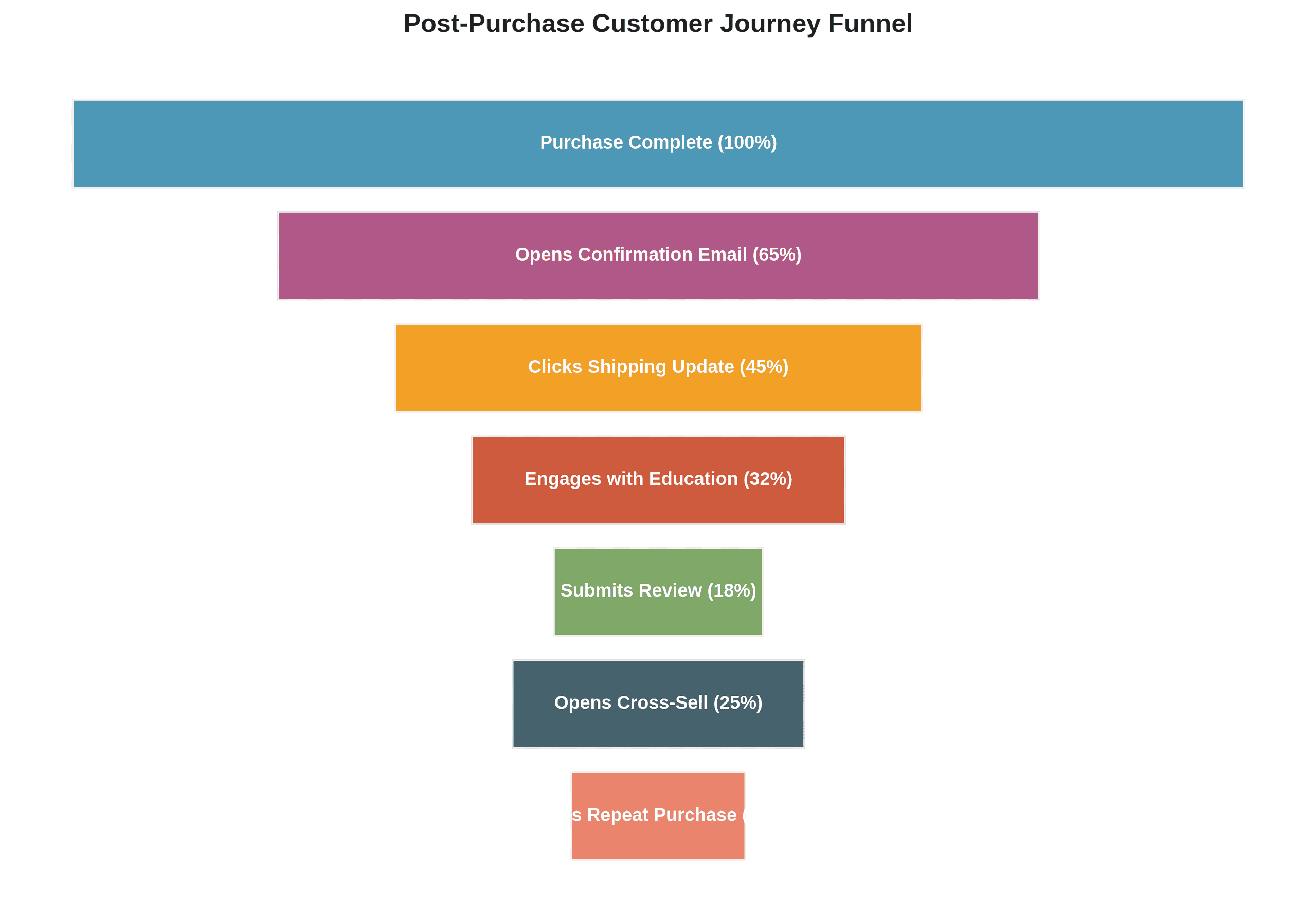
The order confirmation email is the most-opened email you'll ever send, with open rates regularly exceeding 60%. Treat it as prime real estate, not a receipt. What top brands do differently:- Lead with reassurance ("Your order is confirmed") before anything else
- Include clear next-step expectations for shipping timelines
- Add 1-2 personalized product recommendations based on what they just bought
- Feature your brand story or mission statement to reinforce their purchase decision
2. Shipping and Delivery Updates
Proactive shipping notifications aren't just nice-to-have, they're expected. Customers check order status an average of 4-5 times between purchase and delivery. Every one of those touchpoints is an opportunity to build loyalty instead of frustration."Acquiring a new subscriber is 5 times more costly than retaining an existing one. Maintain a consistent sending schedule and relevant content that subscribers signed up for." - Nik Sharma, CEO at Sharma Brands (Source: LinkedIn)Build your sequence:
- Shipping confirmation with tracking link (triggered when label is created)
- "Out for delivery" notification
- "Delivered" confirmation with a CTA to share their purchase on social
- Include cross-sell recommendations relevant to their purchase
3. Product Education and Onboarding Emails
This is where most brands leave money on the table. A customer who knows how to use your product properly is dramatically more likely to repurchase. Sephora sends post-purchase tutorials showing customers how to use their recently purchased beauty products. Dr. Squatch includes care tips for their soap bars that extend product life while building daily habits around their brand. These aren't random nice touches, they're calculated retention strategies and KPIs that drive repeat purchases. What to include:- How-to guides specific to their purchased product
- Common mistakes to avoid
- Tips to get maximum value from their purchase
- User-generated content from other customers
4. Review Request and Social Proof Generation
Reviews are the engine that powers your acquisition flywheel. The sweet spot for review request timing is 7-14 days post-delivery, giving customers enough time to actually use the product."Maximize conversions by focusing 90% of your effort on the first email touchpoint. Our data shows that the majority of conversions happen within the first 30 minutes of signup." - Alex Cabrera, Growth Lead at We Click Group (Source: Industry Interview)Optimize your review flow:
- Send the first request 7 days after confirmed delivery
- Follow up with an SMS review request 3 days later for higher response rates
- Incentivize with loyalty points rather than discounts (protects margins)
- Include a photo upload option, since user-generated visual content converts 4-5x better than text-only reviews
5. Cross-Sell and Upsell Sequences
This is where the revenue really accelerates. The key is relevance: recommend products that genuinely complement what they already bought, not your highest-margin items. Data-driven cross-sell strategies:- Analyze purchase patterns to identify products frequently bought together
- Use browsing behavior plus purchase data for personalized recommendations
- Create bundles specific to their product category
- Time cross-sells 14-21 days after purchase when they've had time to use the product
6. Replenishment and Reorder Reminders
For consumable products, replenishment reminders are the easiest revenue you'll ever generate. Calculate your average product lifecycle and trigger a reorder email 5-7 days before customers typically run out."The real money isn't in one-time buyers, it's in repeat customers. Brands that invest in post-purchase retention see 15% higher repeat purchase rates and significantly lower customer acquisition costs over time." - Ezra Firestone, Co-founder of BOOM! Beauty and Smart Marketer (Source: The Active Marketer Podcast)Make replenishment emails convert:
- Include their previously purchased item pre-loaded in a cart link
- Offer a small subscription discount (10-15%) for auto-replenishment
- Show how many other customers reordered this product
- Add a "running low?" subject line that creates urgency without being pushy
7. Win-Back and Re-Engagement Flow
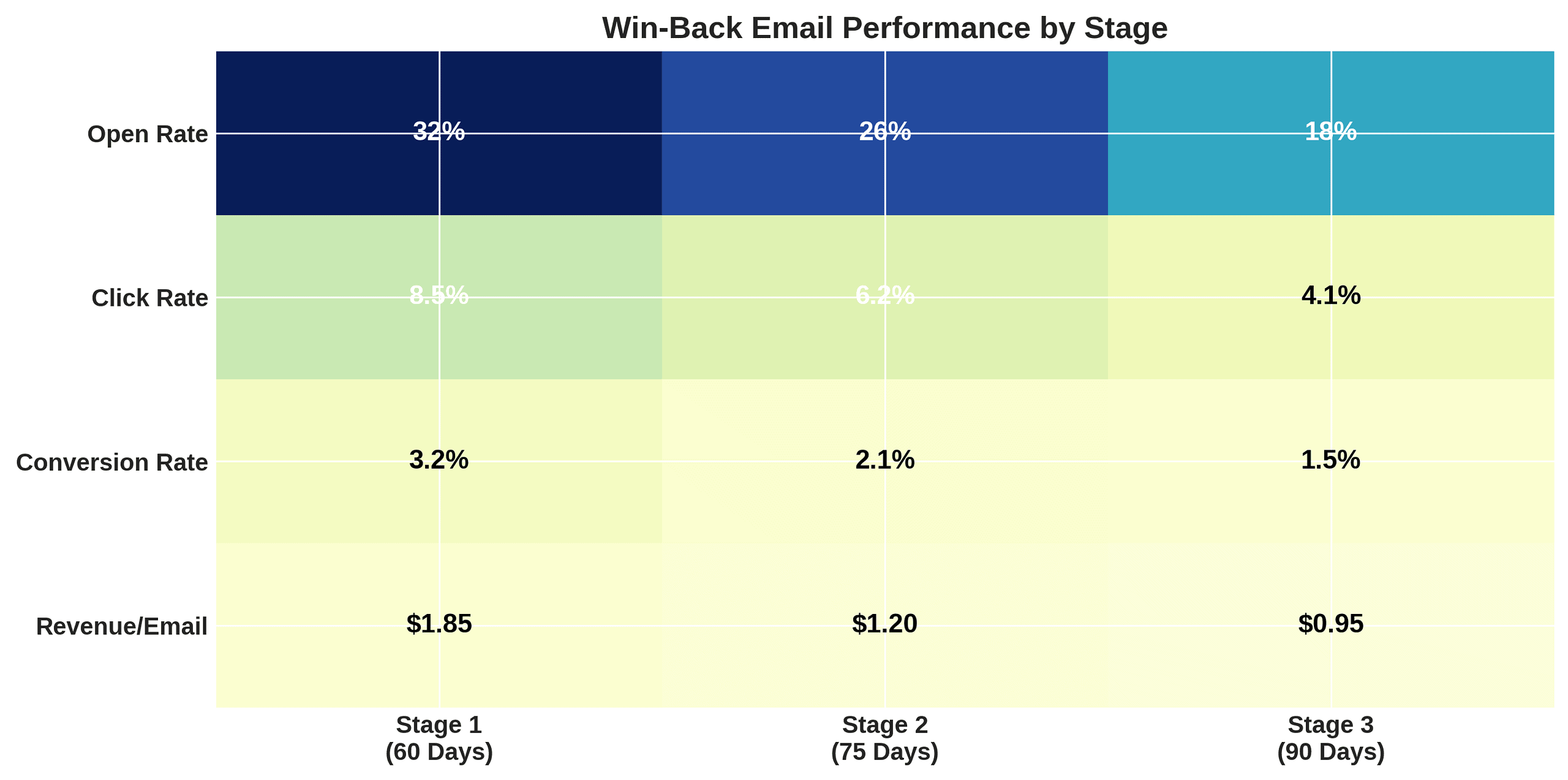
Not every customer will come back on their own. A structured win-back sequence targeting customers who haven't purchased in 60-90 days can recover 5-15% of churning customers. Build a three-stage win-back sequence:- Stage 1 (60 days): "We miss you" with personalized recommendations based on past purchases
- Stage 2 (75 days): Social proof and new arrivals relevant to their interests
- Stage 3 (90 days): Exclusive discount offer as a final incentive
Putting It All Together: Your Post-Purchase Flow Architecture
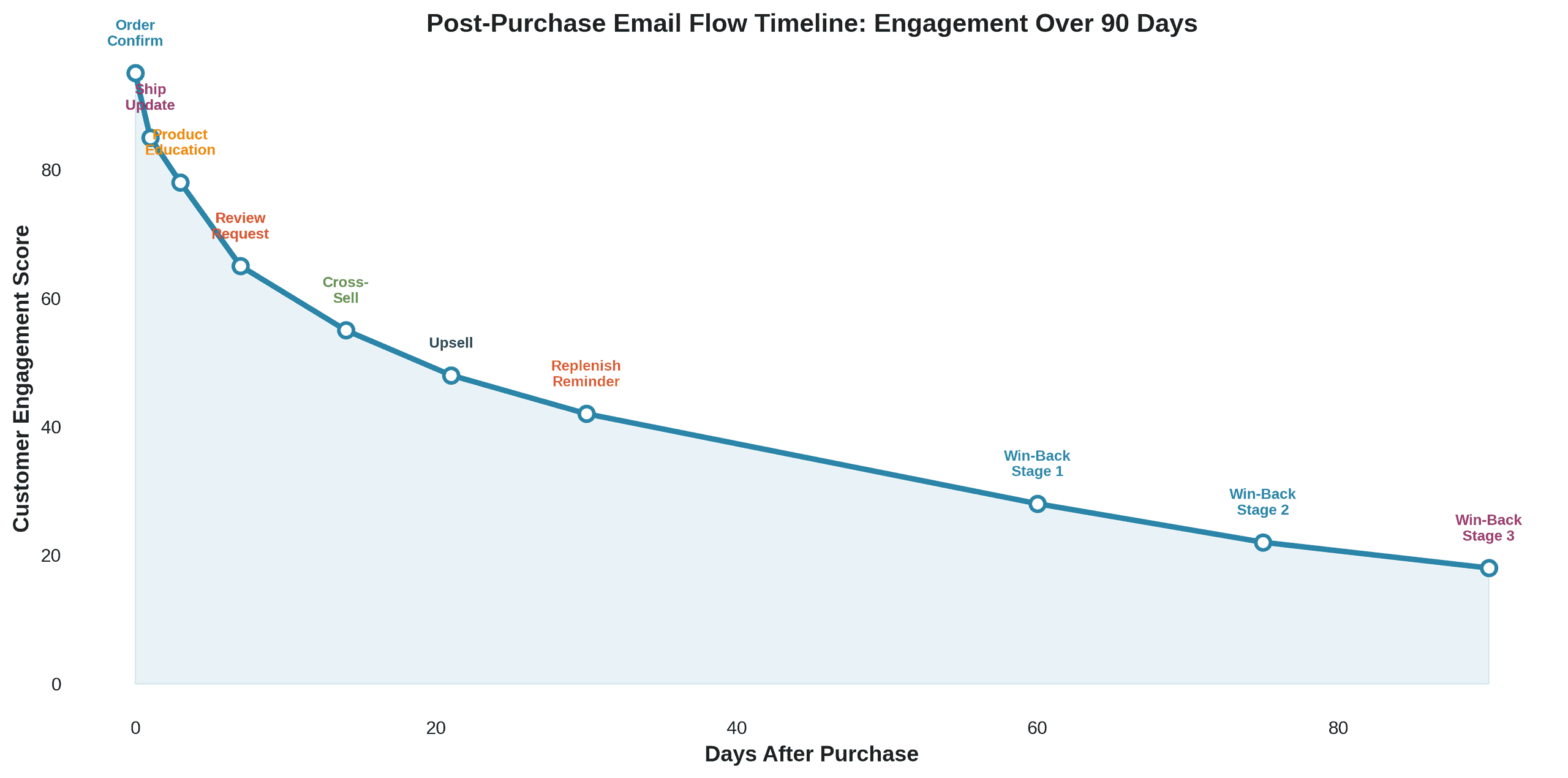
The seven flows above aren't standalone tactics. They're an interconnected system that guides customers from first purchase to brand loyalty. Here's how they connect:- Immediate (0-3 days): Order confirmation, shipping updates
- Early engagement (3-7 days): Product education, onboarding
- Feedback loop (7-14 days): Review requests, social proof
- Revenue expansion (14-30 days): Cross-sell, upsell sequences
- Retention lock-in (25-90 days): Replenishment reminders, win-back
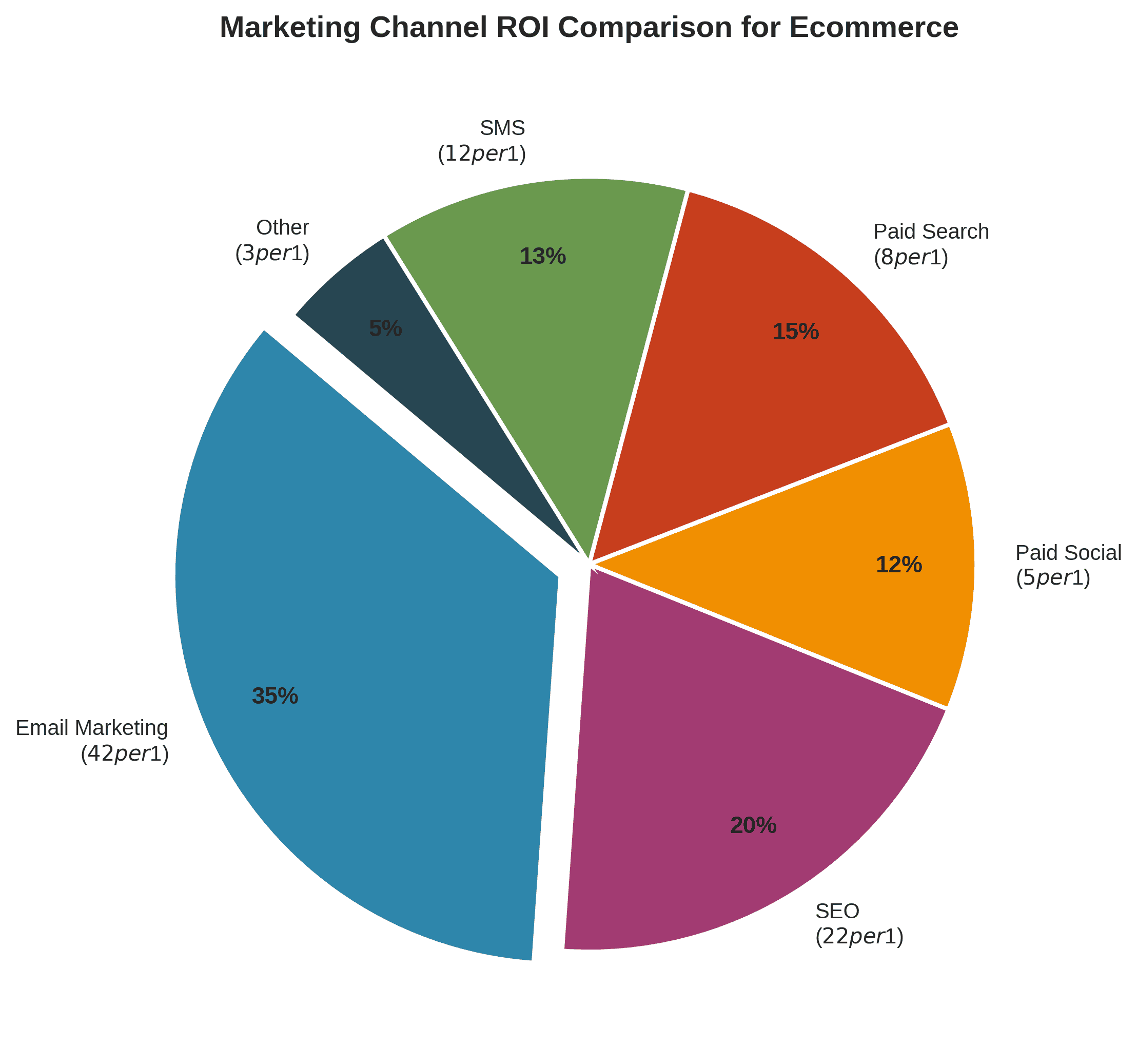
"Make it the Value Bomb. Pack your email with genuinely useful content, whether internal or external, tailored to your audience." - David Bradbury, Founding Partner at May The Growth Be With You (Source: Industry Interview)Healthy ecommerce brands drive 20-40% of total revenue through email marketing, and 76.86% of ecommerce businesses place email in their top 3 ROI-generating channels. Post-purchase flows are the backbone of that performance.
Start Building Your Post-Purchase Engine Today
You don't need to build all seven flows at once. Start with the highest-impact sequences: order confirmation, shipping updates, and review requests. These three alone can meaningfully lift your repeat purchase rate within 30 days. Then layer in cross-sell sequences, replenishment reminders, and win-back flows as your data reveals which customers respond to what. The brands winning in 2026 aren't spending more on acquisition. They're getting more from every customer they already have. Your post-purchase email flow is where that starts. Ready to build post-purchase flows that actually drive revenue? Book a growth strategy call with our team to see how we can architect email automation that turns first-time buyers into lifelong customers.TL;DR
- Post-purchase email flows are the highest-ROI automated sequence most eCommerce brands underinvest in — converting one-time buyers into repeat customers at 5–10× the cost efficiency of paid acquisition.
- The 7 sequences that drive real LTV gains go far beyond order confirmation: they include education flows, cross-sell sequences, loyalty mechanics, and timed replenishment prompts based on actual product consumption cycles.
Frequently Asked Questions
What is a post-purchase email flow?
A sequence of automated emails triggered after someone buys, covering order confirmation, shipping updates, product education, review requests, cross-sells, replenishment and winback. It reaches a customer you have already paid to acquire, which is why the return beats acquisition email.
How many post-purchase emails should you send?
Seven core sequences cover most stores, with three to five emails inside each. The count matters less than the trigger: every email should fire off an event such as delivery or a predicted reorder date rather than a fixed calendar slot.
When should you ask for a product review?
Seven to fourteen days after delivery for most physical products - long enough to have used it, short enough to remember the experience. Consumables should push to 21-30 days. Brands hitting the right window see review submission rates of 8-15%.
Which post-purchase flow makes the most money?
Replenishment for consumables and cross-sell for everything else, because both reach a buyer who has already trusted you once. Order confirmation earns the highest open rate of any email you send, which makes it the best place for a soft next-step offer.
How much revenue should post-purchase flows generate?
For an established store, automated flows should carry a meaningful share of total email revenue, with post-purchase a large part of that. If flows are only a small fraction of email revenue, the gap is almost always missing sequences rather than weak copy.
Last updated:










0 Comments