
TL;DR
- Shopify powers over 3.5% of all websites globally and is the most-used ecommerce platform among high-growth DTC brands because it eliminates hosting complexity, has a best-in-class app ecosystem, and scales from $0 to $100M+ without requiring a platform migration.
- Its native analytics, built-in payment processing, and Shopify Payments (which eliminates third-party transaction fees) make it the strongest unit-economics platform for most ecommerce businesses.
We've worked with numerous e-commerce platforms. Maybe even all of them. At least the most prominent ones.
And we know that choosing the right one can be a game-changer. For us, that's Shopify. It's easy to set up and packed with powerful features that you can customize depending on where your business is at when it comes to growth.
So let's break down why Shopify is our go-to for high performing brands.
What are the main advantages of using Shopify for eCommerce?
Five core advantages: (1) Fast setup (live store in hours, not weeks), (2) Massive app ecosystem (8,000+ apps for shipping, email, marketing), (3) Built-in mobile-optimized checkout that converts 15–25% better than custom carts, (4) Native Apple Pay and Shop Pay (lift conversion 5–10%), (5) Reliable hosting at 99.99% uptime — no DevOps burden.
Is Shopify better than building a custom eCommerce site?
For 95% of DTC brands, yes. Custom builds cost $50K–$500K+ upfront plus $10K–$50K/month in dev maintenance. Shopify Plus ($2K/month) gives you 95% of custom-build flexibility at 5% of the cost. Custom only makes sense for unique transactional flows (B2B configurators, complex multi-vendor marketplaces).
What kind of eCommerce business benefits most from Shopify?
Best fit: DTC brands with $100K–$50M annual revenue, simple-to-medium-complex catalogs, and standard checkout flows. Shopify Plus extends this to $50M–$500M with advanced features (Shopify Flow, Launchpad, custom checkout). Above $500M revenue with complex international/multi-currency needs, brands sometimes outgrow Shopify.
What Makes Shopify Better than Other Platforms?
Every platform has its perks, of course.
We’ve worked with most and here’s what we found makes Shopify the best and why we prefer to work with brands powered by it, compared to other platforms.
It does not need separate hosting. It is easy to set up and has integrated, tight security and performance optimization. Compared to WooCommerce, for example.
It is also a complete eCommerce platform, with advanced eCommerce features, which makes it super scalable even for huge Shopify brands.
Some brands like Gymshark have started small on Shopify and grew to a $ 128M revenue brand. Others, like Dechatlon, made the jump to Shopify to access better eCom capabilities.
This makes it better than Wix or Squarespace, who aren’t as potent eCommerce CMSs.
Finally, it’s simple to use without being tech savvy and has a huge ecosystem of apps and integrations, unlike Magento or BigCommerce.
❌ We love Shopify, but we’re not biased. It has its downsides as well:
- It is dependent on apps and many advanced features require paid third-party tools.
- Monthly costs are higher than some alternatives such as WooCommerce.
- It charges transaction fees if you’re not using Shopify Payments.
- While highly-customizable, it still offers less flexibility than custom solutions.
What are the Main Benefits of Using Shopify?
Every platform has its pros and cons, but if you want to set up an online store—here’s why Shopify might be your best bet.
1. Shopify is Easy to Set Up and Use
One of Shopify’s biggest advantages is its simplicity.
You can set up your Shopify store and launch it in no time thanks to its intuitive dashboard where you don’t need to worry about coding. At all.
When you sign up for the platform, it will provide you with a step-by-step onboarding guide. Here, you can choose and customize your theme, add products, set up payments, and more.
This makes hiring a designer obsolete, especially at the start when you want to cut costs.
Shopfiy will also provide fast, reliable, fully managed hosting.
Yep, this means reliable performance and almost guaranteed uptime. No sudden hair-pullers. It is also super fast and secure, which eases your worries and helps you focus on business.
2. It makes it super easy to sell online
No tool? No problem.
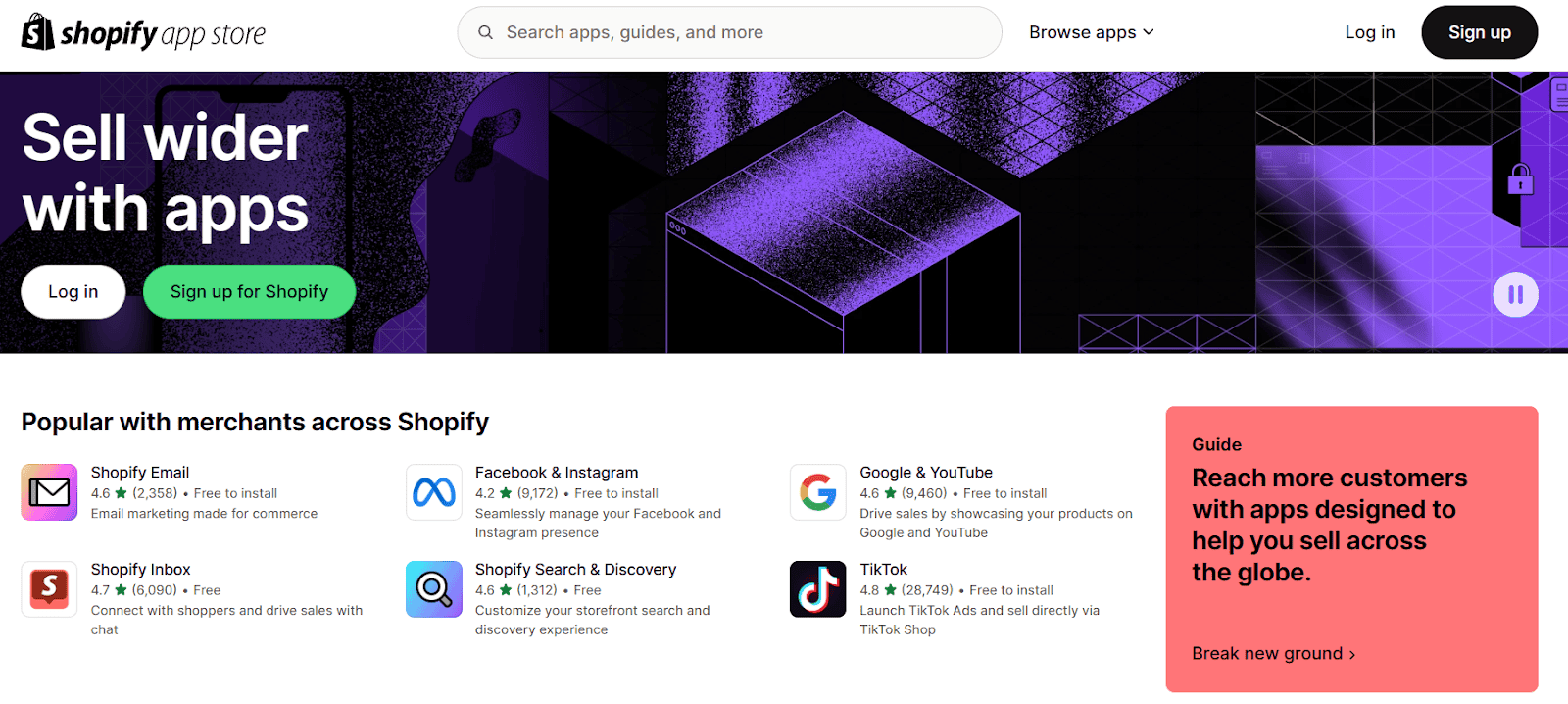
Shopify provides a complete set of eCommerce apps, helping you sell your products across multiple channels.
There’s also two types of tools on Shopify:
- Built-in features such as secure checkout, inventory management, and order tracking which saves you a lot of blushes and help smoothen the customer experience.
- Third-party apps where you can find thousands of integrations—from advanced email marketing to loyalty programs or advanced shipping solutions.
Another major advantage is multi-channel selling, enabling businesses to sell on their Shopify store, but also on Facebook, Instagram, TikTok, Amazon, eBay, and Google Shopping.
Shopify also offers mobile responsiveness, ensuring stores look and function well on any device. The Shopify mobile app allows business owners to manage their store, track orders, and update products from anywhere.
3. It provides integrated payment methods
With ecommerce, a simple payment process is half the job done.
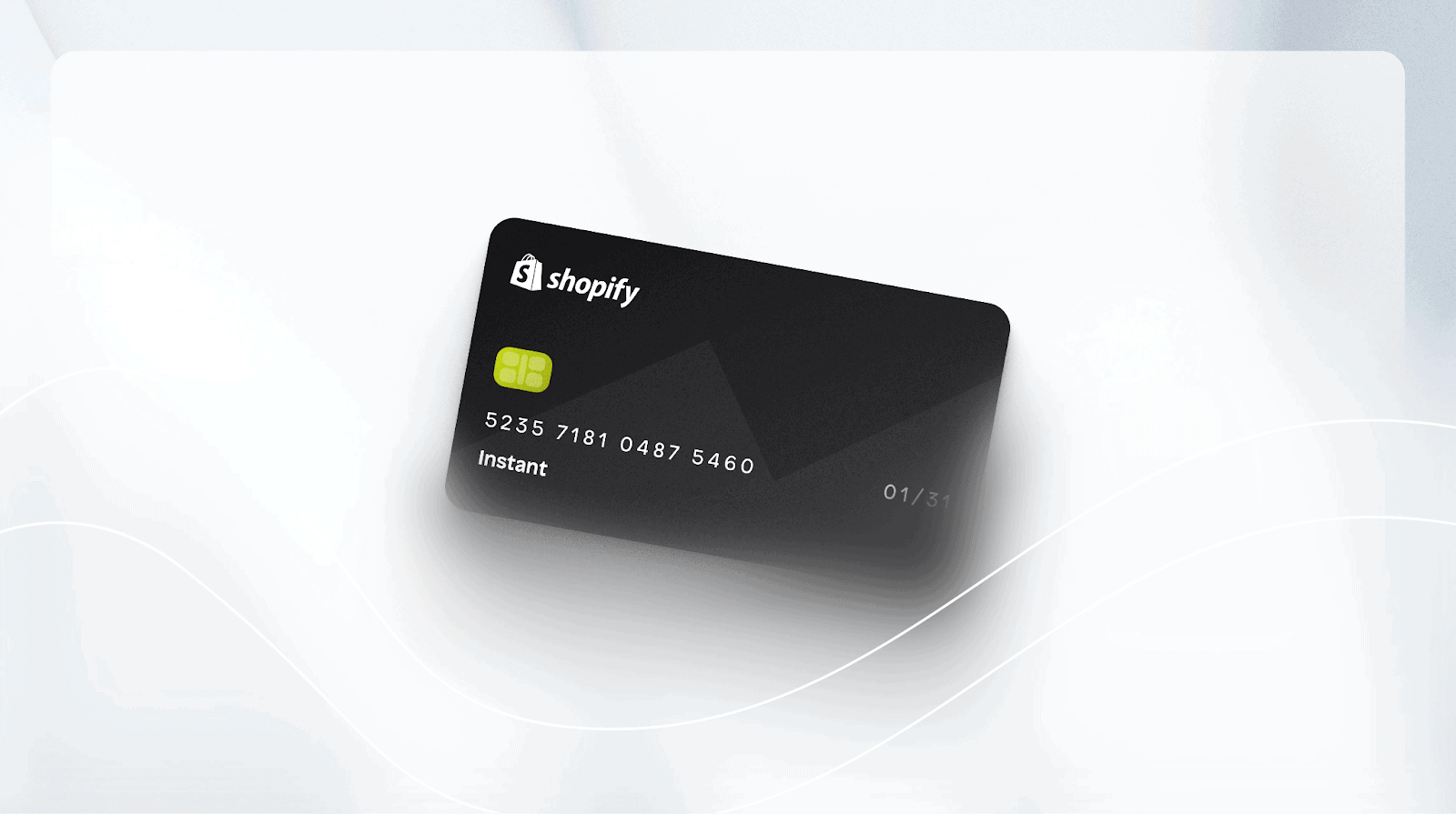
Shopify simplifies online transactions with its built-in Shopify Payments which eliminate the need for third-party payment processors.
In a nutshell, this allows you to accept credit cards, debit cards, Apple Pay, Google Pay, or even buy-now-pay-later options like Shop Pay Installments—without any additional transaction fees.
But that doesn’t mean you can’t add external payment gateways.
If you prefer such, Shopify still supports over 100 third-party providers such as PayPal or Stripe, but using these is subject to a fee. Which ranges from 0.5% to 2% per sale… It can add up.
A key benefit of Shopify Payments is instant integration, meaning you can start accepting payments immediately without complex setups.
Finally, if you prefer more flexible payment options, there’s a solution. Shopify integrates with buy-now-pay-later services and supports subscriptions through apps—which is good for both acquisition and retention.
Overall, Shopify’s payment system is designed for convenience, security, and flexibility, making transactions seamless for both store owners and customers.
4. It’s a Scalable Platform
The main problem when growing a business is that you sometimes “outgrow” platforms or tools.
However, with Shopify this is not the case. One of its biggest strengths is its ability to scale with businesses as they grow.
We’ve already mentioned some bands like Gymshark that went from a small business to an enterprise all using the same platform.
We also managed to grow clients to six-seven figures without the need to ever jump off Shopify for custom solutions.
Therefore, whether you’re a small startup or an established brand, the platform provides a wide range of pricing plans with different features.
So you can adapt depending on the stage of your business:
- New businesses can use Basic Shopify plan.
- MId-sized businesses upgrade to Shopify plan for advanced reports and lower transaction fees.
- Larger businesses can opt for Shopify Plus as it provides customizable solutions and automation tools, plus priority support for high sales volumes.
An underrated benefit is that Shopify can support high-traffic so as you drive more customers to your website, you’ll still enjoy unlimited bandwidth and fast, reliable servers.
Sudden traffic spikes? All good. Holiday sales? No downtime at all.
And, of course, you can seamlessly grow thanks to easy-to-add tools that you can get when the need arises.
5. It Has Marketing and SEO capabilities
This is one of the main reasons why we love Shopify.
We are marketers. And Shopify provides built-in marketing and SEO tools.
For SEO, you’ll have access to customizable meta titles, descriptions, alt text for images, and clean URL structures to improve search rankings. For content, there is a built-in blog.
Additionally, Shopify integrates with major email marketing tools like Klaviyo and Mailchimp, allowing you to send automated campaigns, abandoned cart recovery emails, and customer segmentation for targeted promotions.
Shopify also supports social media and marketplace selling, allowing businesses to connect their store with Facebook, Instagram, Pinterest, TikTok, Amazon, and Google Shopping
If you want to promote your business, you can do it through Shopify. It provides discount codes, gift cards, loyalty programs, and other tools to help you get repeat customers.
If you need help setting up email marketing for Shopify, reach out—we are Klaviyo integration experts!
6. It Offers Streamlined inventory and order management
Tracking stock levels, fulfilling orders, and managing multiple locations…
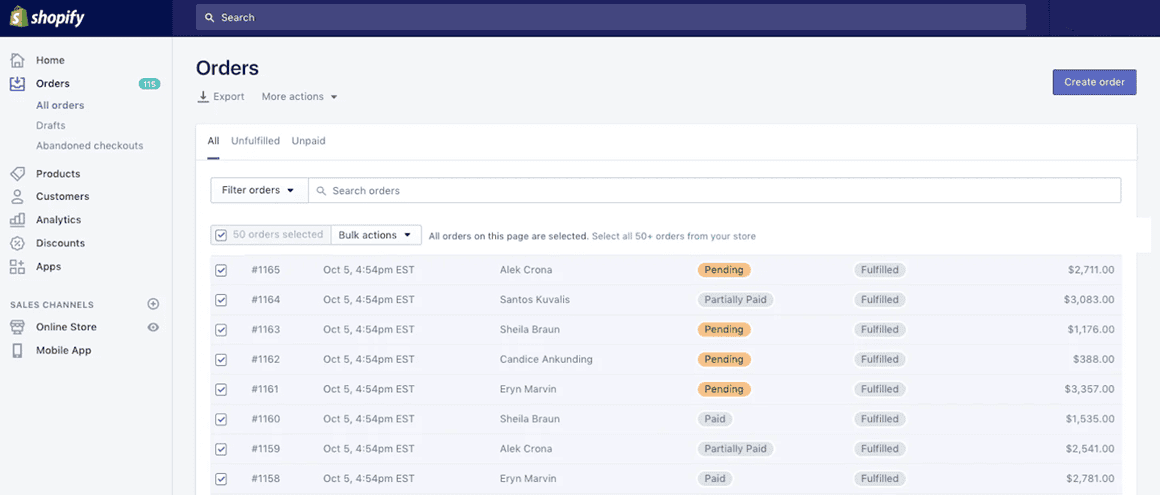
Shopify provides a streamlined inventory and order management system, as well as automated inventory tracking.
You know what this means. You can track stock levels in real-time as customers place orders and if a product is out of stock—it will automatically go out of order. Until you restock it
If you have physical stores or warehouses, Shopify supports multi-location inventory management, allowing you to track stock across different locations and fulfill orders from the nearest available source.
Order management is equally efficient, with Shopify.It offers one-click order fulfillment, bulk order processing, and integrations with third-party fulfillment services like Amazon FBA, ShipStation, and major dropshipping apps.
With this, you can easily generate and print shipping labels, provide tracking details to customers, and automate shipping rate calculations based on location.
For businesses that sell bundled products or subscriptions, Shopify supports these models with specialized apps. Additionally, it provides returns and refund management tools, making customer service smoother.
7. It Provides Terrific Customer Support and Engaged Community
If you’re just starting out, Shopify is the real deal.
Shopify Academy, blog content, and webinars that cover recent eCom trends and marketing strategies can help you stay in the loop even if you can’t afford a Shopify expert.
The platform also offers 24/7 support via chat, email, and phone. Plus a help Center with step-by-step guides, tutorials, and an engaged community for unique questions.
And if you need more personalized support—there’s also access to Experts. A marketplace of sorts for vetted professionals who can help you with a wide range of tasks, from store development to marketing and custom integrations.
We are Shopify experts! If you need any help with setting up tools, tracking, or running ad campaings - reach out!
Shopify is a...
Well, we'll be honest. Shopify is a powerhouse for eCommerce.
It’s easy to use, packed with features, and built to scale. And that applies to all stages of businesses, whether you're just starting or running a multi-million dollar brand.
No platform is perfect, of course. But Shopify’s ecosystem, reliability, and marketing tools make it a top choice.
Need help? We’re Shopify experts—let’s chat!
Frequently Asked Questions
What are the main advantages of Shopify over WooCommerce?
Shopify is fully hosted—no server management, security patches, or plugin conflicts to troubleshoot. WooCommerce requires self-hosting, ongoing maintenance, and WordPress expertise. Shopify also includes Shopify Payments (avoiding 0.5–2% third-party transaction fees), a more robust app ecosystem, and built-in fraud analysis. For non-technical founders, Shopify's operational simplicity is worth the slightly higher base cost.
Is Shopify expensive for small ecommerce businesses?
Shopify's Basic plan at $29/month is accessible for new stores. The breakeven point vs. WooCommerce is roughly $3,000–$5,000/month in revenue—above that, Shopify's lower transaction fees and operational simplicity typically save money compared to self-hosted alternatives. The Starter plan at $5/month allows you to sell via social media and messaging apps before building a full store.
How does Shopify handle high-traffic sales events like Black Friday?
Shopify's cloud infrastructure is designed for traffic spikes—the platform processes millions of orders per minute during BFCM with 99.99% uptime SLAs. Unlike self-hosted solutions, you don't need to pre-provision servers or worry about site crashes during peak traffic. Shopify Plus customers get dedicated infrastructure for enterprise-scale BFCM events.
What Shopify apps are essential for ecommerce growth?
Essential apps: Klaviyo (email + SMS), Postscript or Attentive (SMS if not using Klaviyo), Judge.me or Yotpo (reviews), ReConvert or Zipify (post-purchase upsell), Gorgias (customer support), and a shipping solution (ShipStation or EasyPost). These six app categories cover the core revenue, retention, and operations needs for most growing Shopify stores without the tool sprawl that hurts margins.
At what revenue level should a Shopify brand upgrade to Shopify Plus?
Shopify Plus ($2,000+/month) makes financial sense at roughly $1–2M+ annual revenue, where the lower transaction fee (0.15% vs. 0.5% for Advanced), checkout customization capabilities, and dedicated account support begin to offset the higher monthly cost. The break-even on transaction fees alone is approximately $400K–$800K/year for brands not using Shopify Payments.
Last updated:
















0 Comments